PHYSICS - Ramps & Hangers (Con't)
OPENING QUESTION: Consider a 50. kg object out in deep space that experiences a 25 N push to the left, a 65 N pull to the right and another 10 N push upwards and yet another 40. N pull down.
- Identify important weasel word(s)
- Please sketch a force diagram (show ALL forces acting on that object).
- Calculate the magnitude of the resulting force and show that on your sketch
- Calculate the angle that force makes to the horizontal
- Create a brand new NET FORCE diagram
- Now calculate the acceleration of that object
WORDS O' THE DAY:
- Force ("Push" or "Pull")
- Force Diagram (Show ALL Forces)
- Net Force Diagram (Show RESULTING single force)
CALEDAR: Retakes Thurs/Friday
WORK O' THE DAY:
An object is placed on a frictionless ramp that inclined 35 degrees to the horizontal.
Predict what will happen to that object.
Do a force diagram that shows all the forces acting on that object.
Determine the acceleration down the ramp. BUT WEIGHT (Hah! Get it?), "Mr W, you didn't give us a mass. We can't do it!!.
Au contraire mes amis... yes you can!
DO IT!
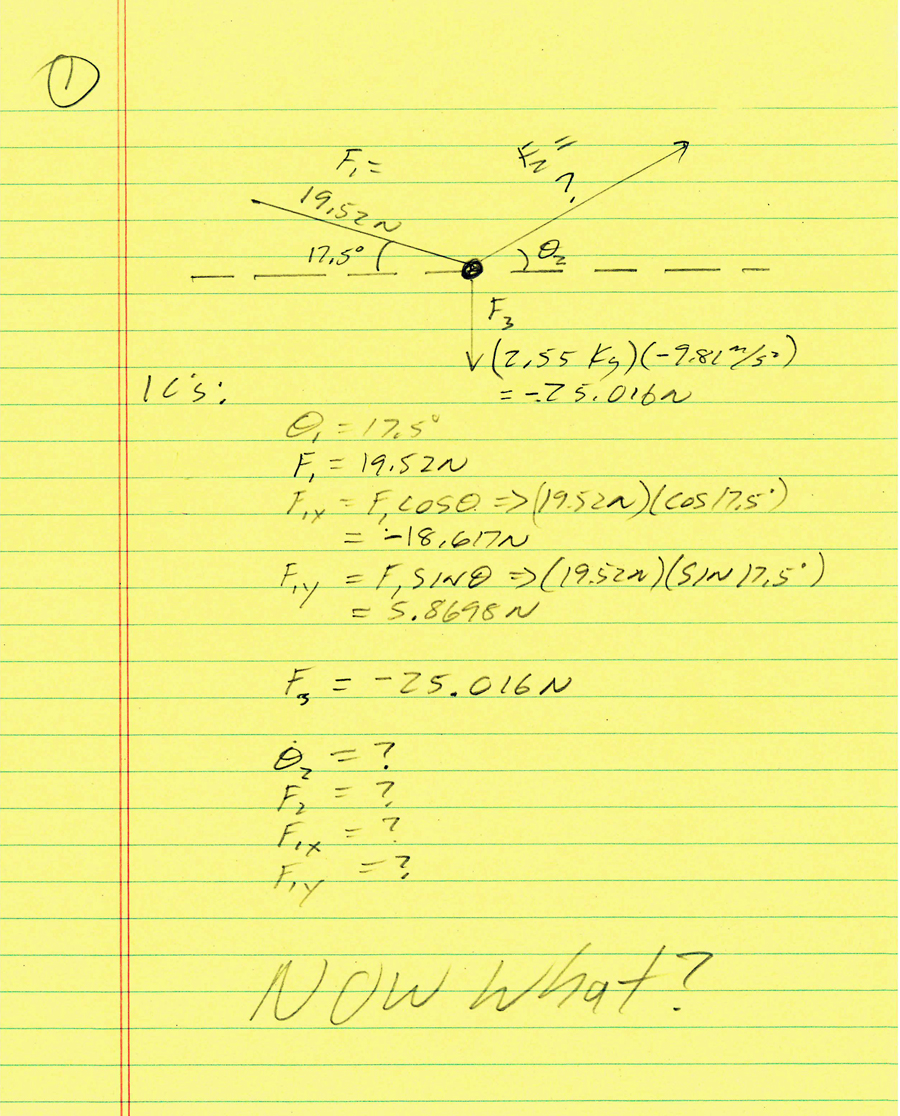
A hanging object has a mass of 2.55 kg and is being supported by two wires. The first wire pulls on the object with 19.52 N of force at angle of 17.5 degrees to the horizontal on the left hand side (as we view it). The second wire pulls on the object at an *some* angle to the horizontal on the right hand side.The object is at rest.
1) Sketch a force diagram that accurately describes that situation
2) Why do we usually refer to the string/supporting wire as massless?
3) What is different about this problem than the others we have worked on up to now?
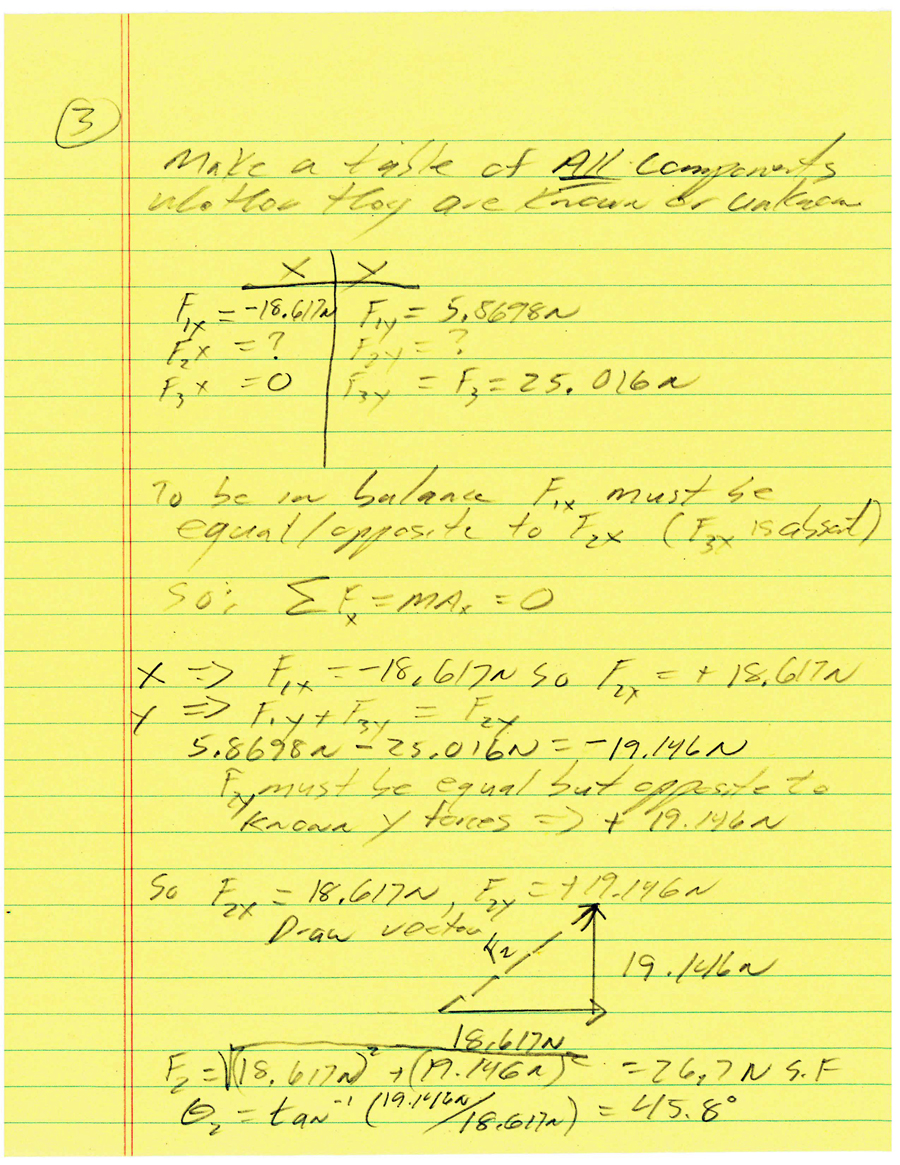
4) Please calculate the missing tension force.
Hint - Hint - Hint:
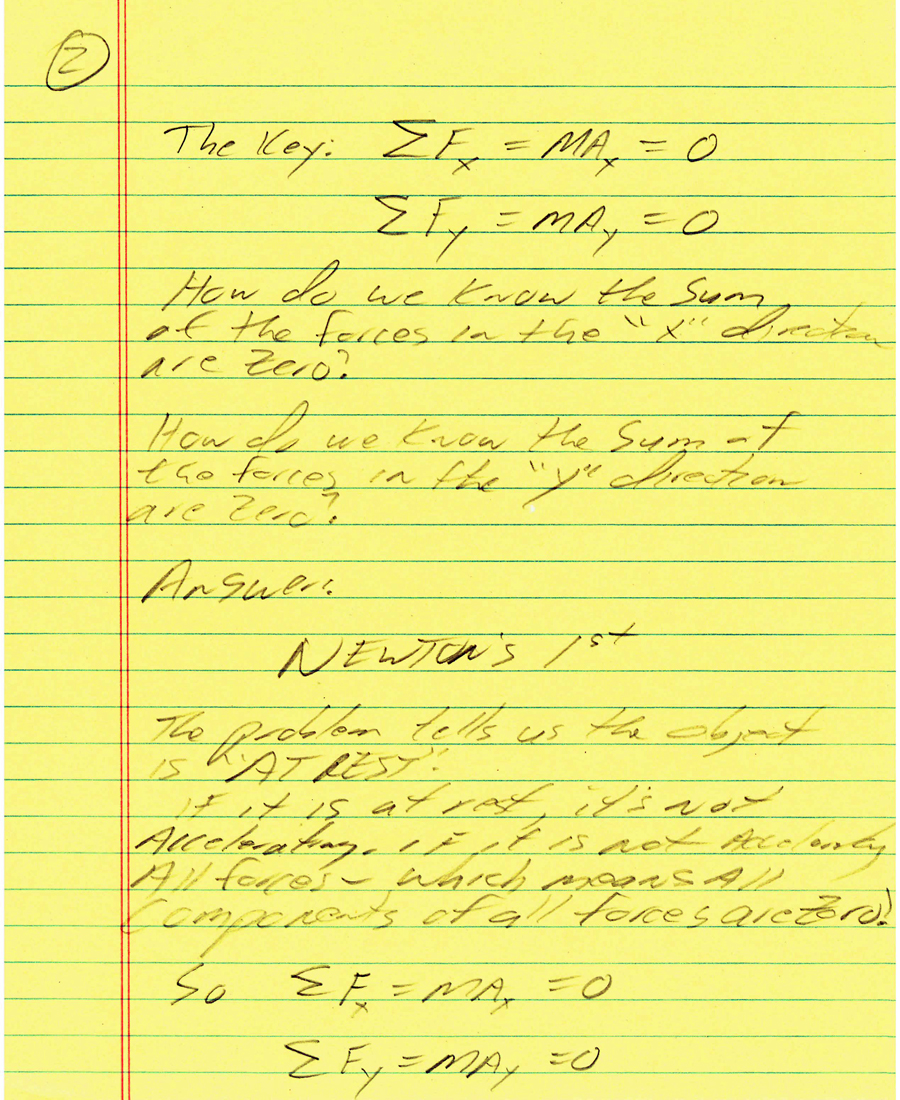
∑Fx = max = 0
∑Fy = may = 0
Hmmmmm
ANSWER:
Problem #2 (varsity edition):
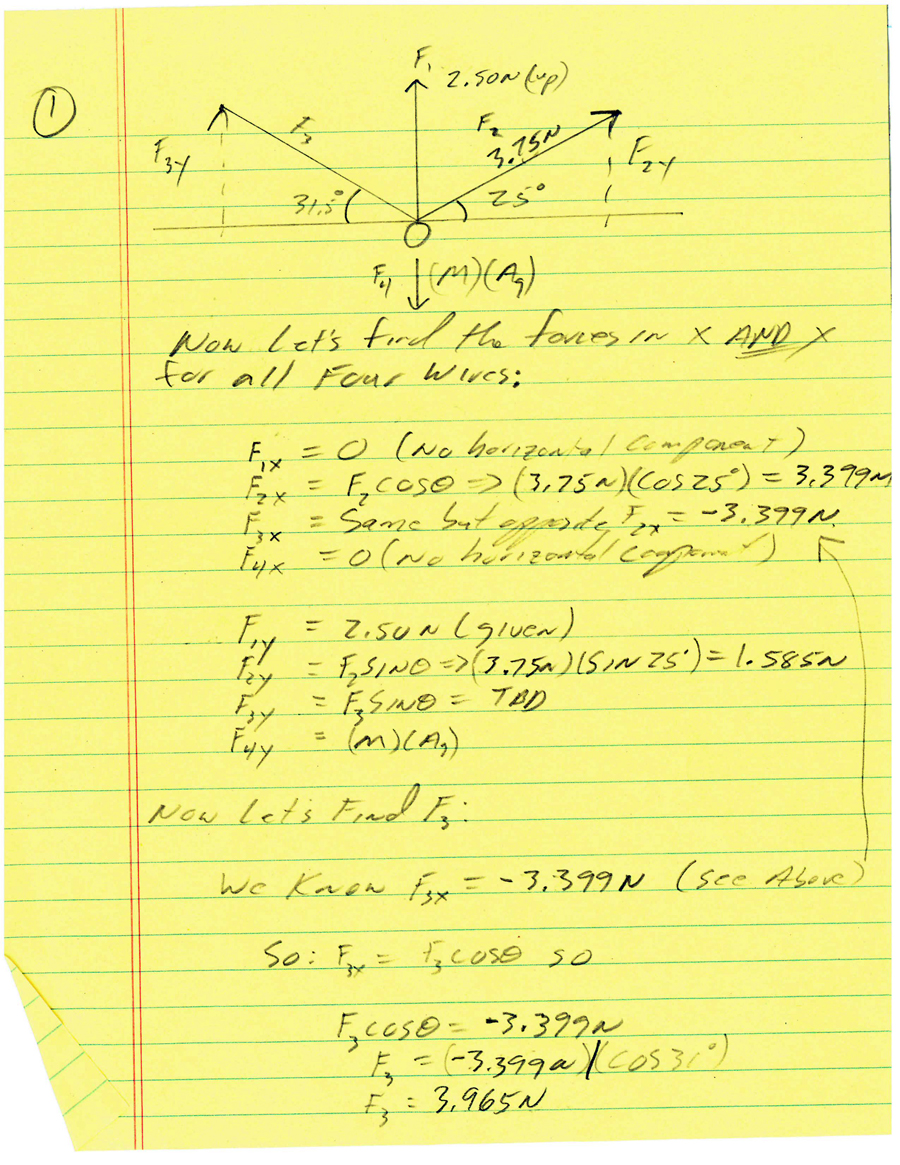
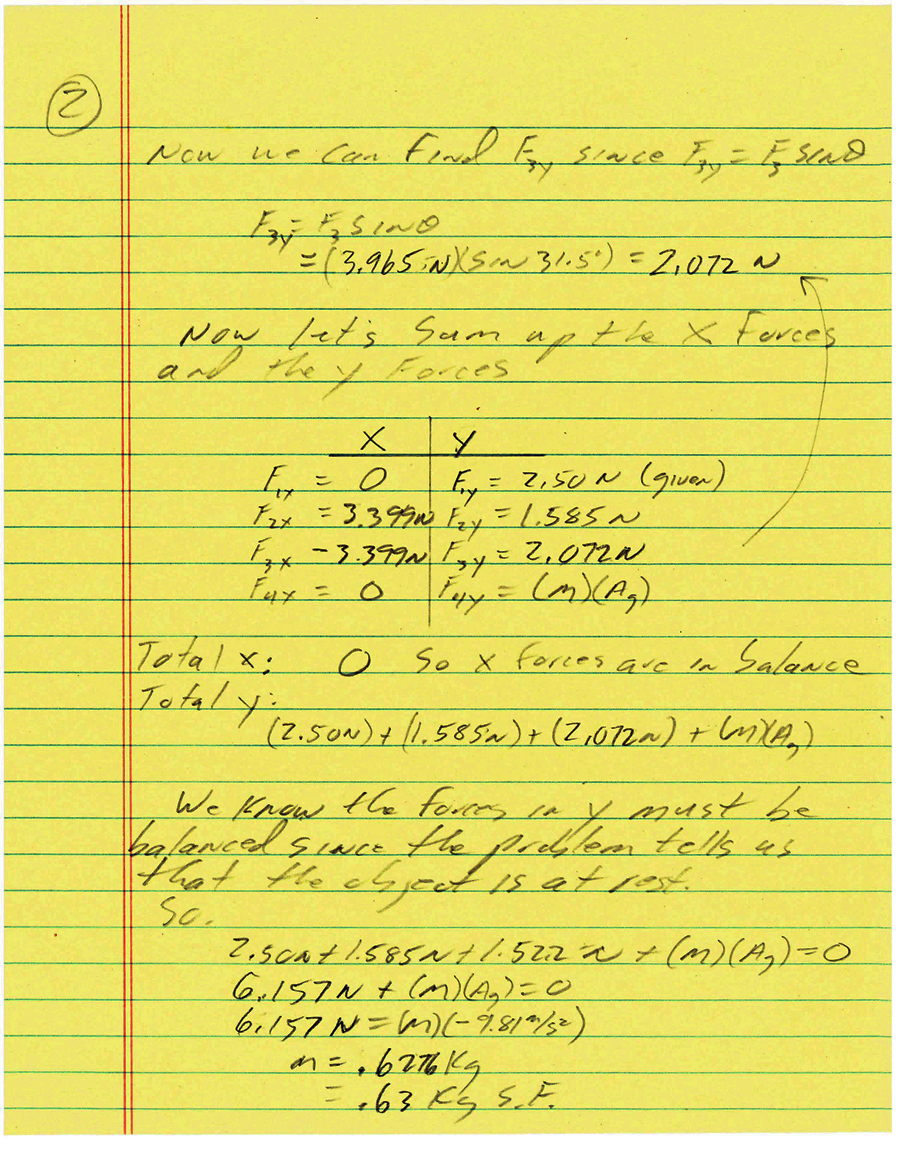
An object of unknown mass is supported by three wires hanging from the ceiling and is at rest. The first wire hangs directly down and exerts a force (F1) of 2.50 N on the object. The second wire hangs up and to the right with a force (F2) of 3.75 N at an angle of 25 degrees to the horizontal. The third wire hangs up and to the left at an angle of 31.5 degrees to the horizontal with a force (F3) of ??? N.
There is an additional force present that you can (AND SHOULD) infer from the problem. Find that force and label it!
Now please find the mass of the hanging object and the Force (F3) ?
HINT: The middle wire does NOT fully support the hanging mass, it shares that duty with the other two wires.
HINT 2: Identify each of the physics weasel words in the problem and make sure you understand why they are relevant (think Newton's First Law)
ANSWER:
Please note that the middle wire is ALSO supporting the object (just like the other two wires) so it is 2.50 N UP!